Quickly, their conversation shifted to the practicalities: How does someone transition from male to female? “He really wanted to do surgery,” the counselor recalled. “He was mostly afraid of being alone, being ostracized or somehow weird.” To the counselor, it was clear Manning was in crisis. “I feel like a monster,” he’d typed on his computer several times. The statement referred partly to his gender struggles but more to his job. He’d taken an oath not to divulge this type of information. But then it spilled out. He told the counselor about a targeting mission gone bad in Basra.
Aug 22, 2013
Chelsea aka Bradley Manning, Comes Out As Transgender
Apr 11, 2013
General Gets Girlie Makeover for Marcos Birthday
Imelda Marcos returned to the Philippines after her husband’s death and the family slowly regained some political power. Imelda is a congresswoman and her son, Ferdinand Jr., is a senator eyeing a presidential run in 2016. Agence France-Presse
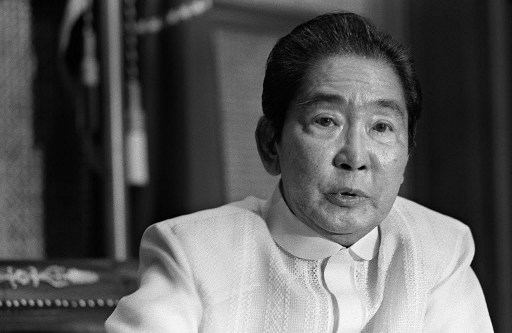
Ferdinand Marcos. AFP FILE PHOTO
Then Philippine dictator Ferdinand Marcos forced his military chiefs to parade as women during a tasteless, sycophantic birthday party planned by his unstable wife, according to US diplomatic cables. The US ambassador to the Philippines in the mid-1970s, William Sullivan, wrote a series of blistering criticisms of Ferdinand and Imelda Marcos in secret cables that have since been declassified and published by WikiLeaks. In one of the reports, dated Sept. 12, 1973, Sullivan recounted a “two-day blast” of a party for Ferdinand Marcos that he said was at odds with state-controlled media reports that he “spent a quiet birthday at his desk.” “In general, every aspect of the occasion was too much, too long, and in questionable taste,” Sullivan wrote in the report to Washington. Sullivan wrote that one of the lowest points was when military chiefs were required, under instructions from Imelda Marcos, to perform in a presidential Palace floor show “in garish female attire.” “This whole affair was a saccharine suffusion of sycophancy,” he wrote, according to the cables published on the website of the antisecrecy organization this week. Ferdinand Marcos ruled the Philippines for nearly 20 years until an Army-backed “People Power” uprising involving millions of people forced him to flee into US exile in 1986. He died in Hawaii three years later. While Sullivan appeared in the cables not to personally care much for either of the Marcoses, the United States supported the dictatorship until the final moments of the revolution. Royal weddingSullivan wrote repeatedly of what he saw as the personality flaws of Imelda Marcos, who cultivated immense power during her husband’s rule and famously lived a lavish lifestyle while most Filipinos endured brutal poverty. In one cable, he warned British diplomats that Imelda would not be concerned about protocol in trying to get herself invited to Princess Anne’s wedding. “First lady has reputation for royal manner of lifestyle in Philippines and would not be above lobbying for invitation to British royal wedding,” he wrote. ‘Perspective a bit awry’ In 1974 cables ahead of a visit by Imelda Marcos to the United States, Sullivan warned his head office that communist Chinese leaders had done a “very effective snow job” that had colored her outlook on the all things American. Sullivan said she was particularly concerned that her daughter Imee was surrounded by “faggots” while studying at Princeton University. “Given all this background, Imelda is in a slightly touchy state and a small offense or an untoward incident could spell lasting damage. She has not lost her sense of humor, but perspective is more than a bit awry,” he warned.
Tags: Diplomacy , Ferdinand Marcos , Imelda Marcos , Internet , Military , Philippines , US , WikiLeaks
Aug 17, 2012
WikiLeaks Resumes Operations After Massive Cyberattack
![]()
WikiLeaks is back online Tuesday morning following more than a week’s worth of massive Distributed Denial of Service (DDoS) attacks on its servers.
A hacker group calling itself “AntiLeaks” took credit for the attacks against WikiLeaks on Twitter, claiming it targeted the website because of WikiLeaks founder Julian Assange’s ongoing efforts to seek political asylum in Ecuador.
“We are not doing this to call attention to ourselves,” @antileaks said in an extended tweet.
“We are young adults, citizens of the United States of America and are deeply concerned about the recent developments with Julian Assange and his attempt at aslyum [sic] in Ecuador. Assange is the head of a new breed of terrorist. We are doing this as a protest against his attempt to escape justice into Ecuador. This would be a catalyst for many more like him to rise up in his place. We will not stop and they will not stop us.”
A decision about Assange’s asylum request is expected this week.
DDoS attacks work by targeting heavy amounts of bogus traffic at a website’s host server in hopes of overloading it and forcing it offline. They’re among the most common form of cyberattacks.
AntiLeaks claimed it had no relationship to the United States or other governments considered enemies of WikiLeaks. However, that hasn’t stopped ongoing speculation that the attack was related to WikiLeaks’ posting of documents related to TrapWire, a counterterrorism surveillance system that collects and analyzes footage from security cameras and license plate readers.
Details about TrapWire were discovered in emails from security intelligence firm Stratfor acquired by Anonymous and leaked by WikiLeaks earlier this year. Some observers immediately labeled it a secret digital surveillance effort that’s in use around the world, though recent reports have cast doubt on several of the more audacious claims made about the system.
WikiLeaks’ documents regarding TrapWire are now back online.
Why Did Ecuador Grant Asylum to Julian Assange?
On the morning of August 16, in the face of rumors that British authorities were considering storming the Ecuadorean embassy in London to arrest Julian Assange, Ecuador's Foreign Minister, Ricardo Patino, announced that his country will grant the WikiLeaks founder political asylum. He declared that his government endorsed the “fears,” expressed by Assange that he could face political persecution if sent to Sweden, and that such asylum would protect him from the possibility of being extradited to the United States.
Ecuador expressed its hope that the United Kingdom would respect its decision and allow Assange—now a political refugee—the right to leave for Ecuador. Assange has been at the embassy since June 19.
Patino read from a list of points detailing the foundation for the asylum request by Assange, who he described as “an award-winning communications professional” known “internationally for his struggle for freedom of expression, press freedom and human rights in general.” He cited “strong evidence” that Assange faced possible “retaliation by the country or countries that produced the information,” revealed by Cablegate, noting that such retaliation “may endanger [his] safety, integrity, and even his life.” He said that, “given an extradition to the United States of America, Mr. Assange would not have a fair trial, could be tried by special courts or military,” and could be the victim of “ cruel and degrading” treatment.
Patino, like many of Assange’s supporters, also acknowledged that Assange must answer for the allegations of sexual assault that have been leveled against him, but added that Swedish prosecutors have undermined his procedural rights during their investigation. Ultimately, he said, “if Mr. Assange is reduced to custody in Sweden (as is customary in this country), [it] would start a chain of events that would prevent the further protective measures taken to avoid possible extradition to a third country.”
Prior to the announcement, Ecuador had approached the Swedish authorities and urged them to come to its embassy in London to question Assange. But when asked to provide assurance that Assange would not be extradited to the United States, Sweden refused.
The British Foreign Office responded, “We are determined to carry out our legal obligation to see Julian Assange extradited to Sweden.” It further declared, “We will not allow Mr. Assange safe passage out of the UK, nor is there any legal basis for us to do so. The UK does not accept the principle of diplomatic asylum. It is far from a universally accepted concept: the United Kingdom is not a party to any legal instruments, which require us to recognize the grant of diplomatic asylum by a foreign embassy in this country.”
In anticipation of controversy, the government of Ecuador laid out a slew of conventions, treaties and other tenets of international law going back decades, which gives them the right and authority to grant refugee status to Assange, among them, the 1948 Universal Declaration of Human Rights and Declaration of the Rights and Duties of Man, which gives people the right to seek and enjoy political asylum in any country, for political reasons, as well as the Geneva Convention of August 12, 1949, relative to the Protection of Civilian Persons in Time of War, which forbids the transferring of an asylum seeker to a country where he or she fears persecution for his political views.
Ecuador went even further, however, stating that it has a tradition in recent years of “accommodating” a “large number of people who have applied for territorial asylum or refugee status.” A number of Colombians, for example, have fled armed conflict. According to the High Commissioner for Refugees, Ecuador’s “refugee policy” has been praised, they highlighted the fact that the ”country has not been confined to camps for these people, but have been integrated into society, full enjoyment of their human rights and guarantees.”
Ecuador has established that it considers asylum to be a human right and that countries should act in cooperation to grant refugee status to humans in danger. “The effective implementation of this right requires international cooperation,” Patino said. Without such cooperation, the institution of asylum would be “totally ineffective.”
There was an escalated police presence outside the Ecuador embassy in London the night before the announcement, and a handful of people, presumably Assange supporters, were arrested by Metropolitan Police that morning. Following Patino's statement, hundreds gathered outside the embassy to demonstrate in support of Assange.
Center for Constitutional Rights attorney Michael Ratner, who is a member of WikiLeaks’ legal team, contends that the granting of asylum "overrides the effort to prosecute Assange for being a journalist of WikiLeaks." Typically, a person seeking political refugee status or asylum might face persecution. In this case, Assange fears being in Swedish custody because of the possibility he would be handed over to the United States, where he would face prosecution over what could be considered political offenses. So long as this possibility exists, the British government should respect the granted asylum.
For now, the media coverage will undoubtedly remain focused on whether Assange can ever make it out of the Ecuadorean embassy and there are already glib posts about what him being stuck there indefinitely. But what is more important is what the UK is doing and has done. Attempting to coerce and intimidate Ecuador and threatening to storm the embassy yesterday was an astounding and dangerous move. The central focus of discussion now should be over the human rights implications of allowing or not allowing Assange safe passage to Ecuador. Additionally, if the Swedish government is genuinely concerned over the women who brought forth the allegations against him, it is troubling to see its government continue to refuse to send someone to question Assange in London. It is this refusal that ultimately helped convince Ecuador to grant asylum.
Ecuador grants Assange asylum in confrontation with Britain
QUITO—Ecuador granted political asylum to WikiLeaks founder Julian Assange on Thursday, triggering a diplomatic confrontation with Britain, which angrily insisted it would extradite him to Sweden.
Ecuadoran Foreign Minister Ricardo Patino said that Sweden might one day send Assange to the United States, where he would not get a fair trial for publishing a trove of classified documents.
“The Ecuador government, loyal to its tradition of protecting those who seek refuge with us at our diplomatic missions, has decided to grant diplomatic asylum to Mr Assange,” Patino told a news conference.
The decision escalated a crisis that began on June 19 when the 41-year-old Australian tool refuge in the Ecuadoran embassy in London to avoid extradition to Sweden, where he is wanted for questioning in a sex assault case.
Assange supporters outside the Ecuadoran embassy in London cheered the news, and the WikiLeaks founder thanked Ecuador for its “courageous” decision.
“While today is a historic victory, our struggles have just begun. The unprecedented US investigation against WikiLeaks must be stopped,” he said.
Britain insisted it would carry out its “obligation” to extradite Assange regardless of Ecuador’s decision and Sweden summoned the Ecuadoran ambassador to explain Patino’s charge that that Assange would not get a fair trial.
Britain’s foreign minister William Hague warned the embassy that “harboring of alleged criminals, or frustrating the due legal process in a country, is not a permitted function.”
Washington denied it was lobbying Britain to take Assange into custody.
“With regard to the charge that the US was intent on persecuting him, I reject that completely,” State Department spokeswoman Victoria Nuland said.
“It is an issue among the countries involved and we are not planning to interject ourselves.”
The Washington-based Organization of American States scheduled emergency talks for Thursday to discuss the situation.
British police beefed up their presence outside the embassy, which is near the famed Harrods department store, with around 30 officers and nine vans stationed around the building.
“Nobody is going to scare us,” Ecuador’s President Rafael Correa said on his Twitter account, minutes before the decision was announced.
Patino said his government reached its decision after Britain, Sweden and the United States refused to provide guarantees that Assange would not be extradited to the United States.
In 2010, WikiLeaks obtained and published online an enormous cache of US military documents on the war in Iraq and Afghanistan and diplomatic cables that deeply embarrassed the United States.
A US army private, Bradley Manning, faces trial in a US military court later this year for allegedly passing the classified material to WikiLeaks.
“If he were extradited to the United States, Mr Assange would not receive a fair trial,” Patino alleged.
“It is not implausible that he would be subjected to cruel and degrading treatment and be condemned to life in prison or capital punishment.”
Patino said Assange’s imprisonment in Sweden “would open up a chain of events” that could result in his extradition to a third country.
“As a result, Ecuador feels his arguments mean his fears are genuine, that he could be the victim of political persecution because of his decisive defense of the freedom of expression and the freedom of the press,” he said.
Patino said that if Britain did not grant Assange safe passage out of the country, he would remain “under the protection of our embassy.”
Spanish rights lawyer Baltasar Garzon, who is helping Assange’s defense, raised the possibility of taking the matter before the International Court of Justice in The Hague.
Britain’s Foreign Office expressed disappointment and said the Ecuadoran decision changed nothing.
“Under our law, with Mr Assange having exhausted all options of appeal, the British authorities are under a binding obligation to extradite him to Sweden. We shall carry out that obligation,” a Foreign Office spokeswoman said.
Swedish Foreign Minister Carl Bildt took to his Twitter account to respond.
“Our firm legal and constitutional system guarantees the rights of each and everyone. We firmly reject any accusations to the contrary,” he said.
Before the decision, British police at the Ecuadoran embassy arrested three protesters and put up barricades to keep back a crowd of about 30 Assange supporters chanting “Hands off, Ecuador!”
Apr 26, 2011
Why Julian Assange Can't Let Go of His Secrets
John Cook —Wikileaks founder Julian Assange's reputation as a fighter for transparency and destroyer of secrets ought to be thoroughly demolished by today's spectacle of the New York Times literally forcing him to give up the Guantanamo Bay files he'd been hoarding for months.
Assange has been sitting on the 700-plus Gitmo detainee files since at least May of last year, when accused Wikileaker Bradley Manning confessed in a chat session to passing them to Wikileaks along with a plethora of classified military reports and diplomatic cables. They were the final sizable arrow in Assange's anti-government quiver, and for months we've been waiting, and waiting, and waiting for their inevitable release. But Assange kept holding back.
They were published last night, at long last, only because the New York Times finagled its own copy—presumably from Wikileaks defector Daniel Domscheit-Berg—and shared it with NPR and the Guardian. Wikileaks, which had been working with the Washington Post and other papers on the Gitmo papers but was still keeping the information embargoed, scrambled to get its own version up.
If a newspaper had scored a trove of Gitmo papers and kept them secret for a year, the delay would cause a minor scandal—as the New York Times' decision to hold its blockbuster illegal surveillance story did. The fact that Wikileaks represents itself not as a newspaper but as a force for transparency and an anti-secrecy organization makes it all the more galling that Assange had to be prodded by the hidebound Times—which had no incentive to dawdle—into actually, you know, revealing his secrets.
And those secrets remain largely unrevealed! Wikileaks' own headline—"The Guantanamo Files: 779 classified prisoner dossiers revealed from the world's most notorious prison"—is a lie. Wikileaks has only teased 80 of the files it claims to have, promising that the rest "will be released daily over the coming month." It made a similar promise with the 250,000 classified diplomatic cables that it never actually released—so far, 7,579, or 3% of the total, have been released. The rest remain, for all intents and purposes, classified. When it comes to the Gitmo files and the cables, Assange is an agent of secrecy, not its enemy.
Why the strip-tease act? Assange has claimed in the past that simply dumping secret data on the web is a strategy for making sure that newspapers ignore it, and that in order to honor his sources' desires for maximum impact, he needs to work with "news partners" and drag things out a bit. He's also cited "harm-minimization"—the need to review each document to make sure informants and such aren't named before publication. But if his sources' wishes are to be honored—and to be clear, Manning has for the past year been essentially Assange's only source—then Assange had better speed things up. In chats with hacker Adrian Lamo before he was arrested, Manning made clear that he took the risk of leaking his mother lode to Assange because he wanted it all—not just 3%—made public: "Hillary Clinton and several thousand diplomats around the world are going to have a heart attack when they wake up one morning and find an entire repository of classified foreign policy is available, in searchable format, to the public.... [It will be] worldwide anarchy in CSV format.... Beautiful, and horrifying."
If Assange were acting in Manning's interest, he would have gone for "worldwide anarchy" and thrown everything up as soon as he could. But he took another tack, one that involved partnering with high-profile news outlets, releasing Manning's data in dribs and drabs while continuously hinting at the next blockbuster disclosure, and becoming a global celebrity in the process. While Manning sits in a prison cell.
More recently, Assange has come to view the unpublished bits of Manning's cache as, literally, insurance. That's what he called the 1.4 gigabyte encrypted file he posted to Wikileaks last year, just a month before allegations of rape surfaced against him in Sweden. The clear implication was that if anything happens to him—like, say, extradition to Sweden to face the aforementioned charges—a password would be distributed and the file made public. With each new disclosure, that insurance file affords him less and less leverage, which explains his reluctance to follow Manning's wishes and actually disclose information.
And with the Gitmo files—assuming he actually carries through on his promise to release the remaining ones—Assange has essentially blown his wad. The only outstanding bits he has from Manning are videotape of a 2009 airstrike in Granai, Afghanistan by U.S. gunships that killed roughly 100 civilians and 15,000 "war logs" from Afghanistan that he held back from release last year for further redaction. In his chats with Lamo, Manning described the Afghanistan video as "not nearly as damning" as the other video he sent to Wikileaks, footage of two Reuters journalists being killed by U.S. helicopters in Baghdad. And it's unclear what the remaining war logs contain, but any news in them has almost certainly been reported by the New York Times and the Guardian, which also had access to the full unredacted cache. Aside from those Manning leftovers, Assange is also said to have the hard-drive of a Bank of America executive from 2006, but the data on it is "not self-explanatory and...he personally was unable to make much sense of it," according to Reuters.
In other words, the Gitmo files could be Assange's last hurrah. Wikileaks' encrypted submission has been broken for more than a year now, which means no new juicy tidbits have been coming in. And without the threat of more earth-shattering disclosures down the road, will anyone really care whether Assange is extradited to Sweden, or gets convicted of rape, or goes to jail? Not really. Which is why he's publishing the Gitmo files under duress.
[Photo of Assange, top, via AP. Photo of Domscheit-Berg and Assange, bottom, via Getty Images]
Popular Posts
-
via washingtonpost.com It has been awhile since I spent some quality time in Android. While I was away, it appears we have both chang...
-
Bong Joon-ho (The Host) is finished off his next film, Snowpiercer . Based on the French graphic novel Le Transperceneig...
-
Galaxy S launches seem to carry a curse for SK Telecom. Last year the Korea Communications Commission (KCC) imposed a ban on SK preventing s...
-
i The graffiti on an Egyptian carving at the 3,500-year-old Luxor Temple reads: "Ding Jinhao was here." The pa...
-
Were you among those who jumped for joy when Windows Explorer got its new moniker? Good news, nomenclature fans, for Redmond has de...
-
Photographs by Ty Wright for BuzzFeed News, Isaac Hinds “Bodybuilder” is not the first word that comes to mind when you see Ashle...
-
“Fifty Shades of Grey” easily dominated the competition this Valentine’s Day weekend. The number of weeks open for eac...
-
Tyson Beckford Treats Mariah Carey to the Lap Dance of a Lifetime Like us on Facebook Mariah Carey is working and playing hard in La...
-
If the recent series of Captain America: Civil War casting announcements and leaked promotional art didn’t make it clear, Marvel’s ne...
-
Sam Smith/Instagram A lot can happen in two weeks — ju...